
St. Petersburg, FL 33710
Understanding Cancer Skin Peeling: Causes, Symptoms, and Treatment Options
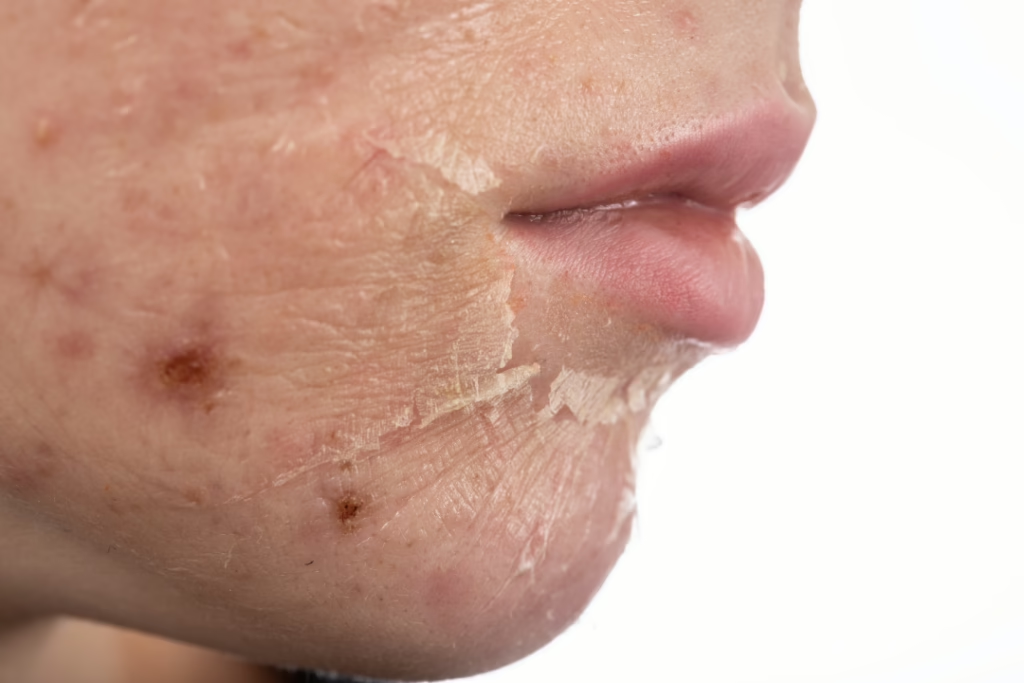
Peeling skin usually means dryness, sun damage or irritation. Sometimes, though, a patch that keeps flaking or crusting is a skin cancer or a precancer. Here is how to tell the difference and what treatment looks like.
When a Peeling Spot Can Be Skin Cancer
Several common skin growths look scaly or flaky. Actinic keratoses are rough, scaly spots caused by sun damage, and some can turn into skin cancer over time. Squamous cell carcinoma often looks like a scaly red patch, a crusted bump or a sore that will not heal. Superficial basal cell carcinoma can look like a pink, slightly scaly patch, often on the chest or back, and is sometimes mistaken for eczema.
The clue is persistence: a spot that keeps peeling in the same place, or heals and comes back, should be checked.
The Three Main Types of Skin Cancer
- Basal cell carcinoma, the most common, grows slowly and rarely spreads. It often looks like a shiny bump or a pink patch.
- Squamous cell carcinoma, the second most common, appears as a scaly patch, a firm bump or a sore. It can spread if it is left untreated.
- Melanoma is less common but more dangerous. It starts in the pigment cells and often looks like a new or changing mole.
Signs That Deserve a Skin Check
- A scaly or peeling patch that returns in the same spot
- A sore that has not healed in four weeks
- A shiny, pink or pearly bump
- A spot that bleeds, crusts or itches for more than a month
- A new mole, or one that changes in size, shape or color
Who Is Most at Risk
- Fair skin that burns easily, light eyes, red or blond hair
- A history of sunburns or tanning bed use
- Many moles, or unusual moles
- A personal or family history of skin cancer
- A weakened immune system, for example after an organ transplant
- Years of outdoor work or sun exposure
Anyone can develop skin cancer, including people with darker skin, where it is often found later.
How Skin Cancer and Precancers Are Treated
A biopsy confirms the diagnosis. Treatment then depends on the type, size and location of the growth.
- Precancers and some superficial cancers: freezing, prescription creams such as imiquimod or fluorouracil, or light-based photodynamic therapy
- Small, low-risk cancers: scraping and cautery, known as curettage and electrodesiccation
- Surgical excision, which removes the cancer with a margin of healthy skin
- Mohs surgery for cancers on the face, scalp and hands, or those that have come back, removing the cancer layer by layer while sparing healthy skin
- Radiation or medicines when surgery is not suitable or the cancer has spread
Protecting Your Skin
- Use a broad-spectrum sunscreen of SPF 30 or higher every day, and reapply every two hours outdoors
- Wear a wide-brimmed hat, sunglasses and sun-protective clothing
- Seek shade in the middle of the day and skip tanning beds
- Check your skin once a month and have a professional skin exam every year, or more often if you have had skin cancer
Before You Go
It can. Squamous cell carcinoma, superficial basal cell carcinoma and actinic keratoses often look scaly or flaky. A peeling spot that keeps returning in the same place should be checked.
With an exam and, if needed, a quick biopsy under local numbing. The sample is examined under a microscope to confirm what it is.
Actinic keratoses are not cancer, but some can turn into squamous cell carcinoma over time, so they are usually treated.
Reading is a start. A visit is an answer.
Schedule An Appointment →