
Upper Blepharoplasty
Open, rested eyes — still unmistakably yours.
The Eyes Speak First.
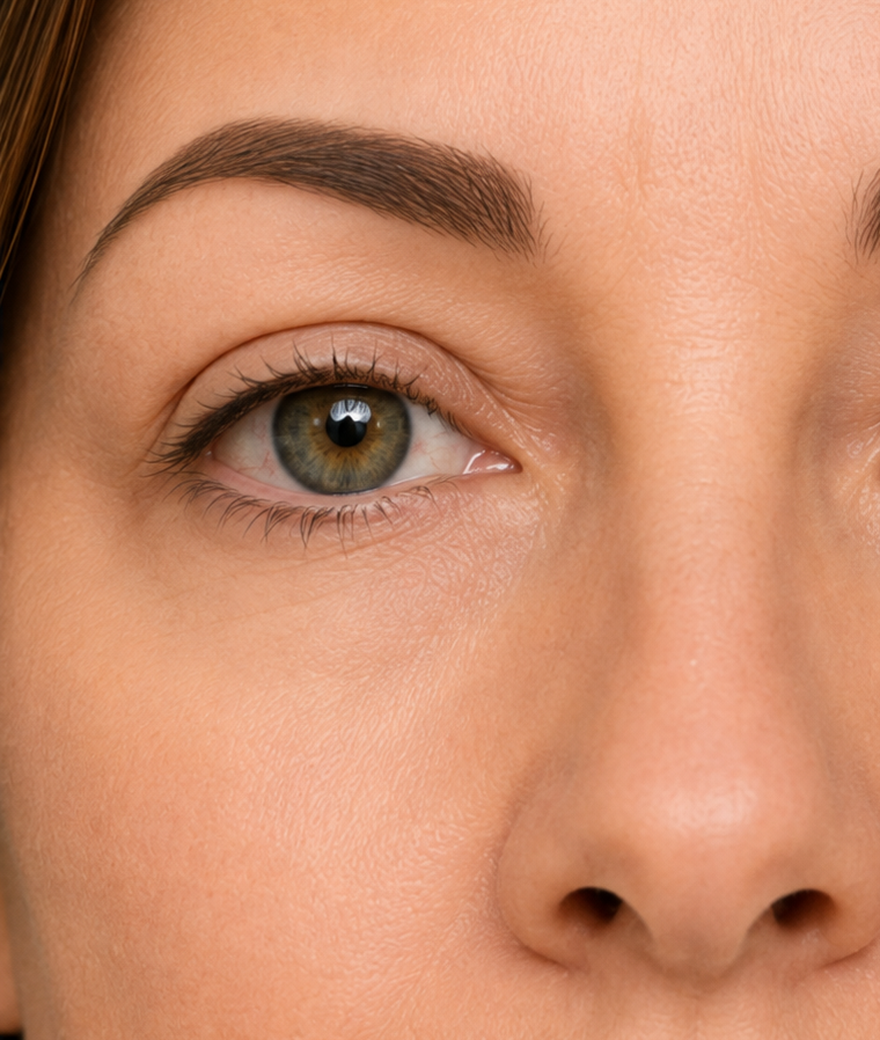
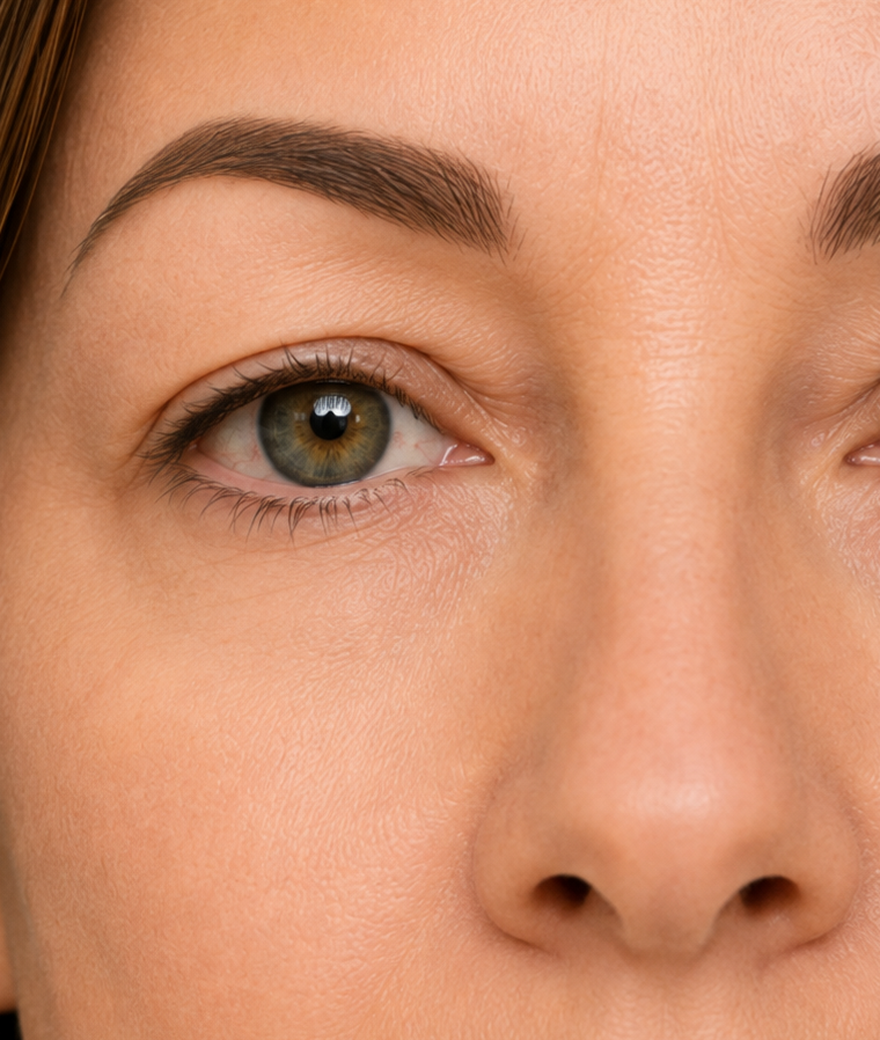
Over time, the delicate skin of the upper eyelid stretches and folds — and the world starts reading you as tired, even when you're anything but.
Upper blepharoplasty removes that excess skin — and gently sculpts the underlying tissue — through a fine incision hidden in the natural crease of the lid. Performed in-office under local anesthesia — you go home the same day.
Dr. Wall's approach is deliberately conservative: remove precisely enough to open the eye, never so much that it changes its character. The goal is a face that looks rested — not operated on.
Is It Time?
Most patients are in their 40s to 70s, in good health, and share one thing: the mirror stopped matching how they feel. If any of these sound familiar, a consultation is worth the conversation.
Hooded or heavy upper lids that make you look tired or stern
Eyelid skin resting on your lashes — or interfering with your upper field of vision
Eyeshadow and liner that disappear into the fold by midday
A desire to look refreshed — with realistic expectations and no interest in looking "done"
Book your appointment online.
Often Paired, Always Balanced.
The upper face works as one composition — lid, brow, and skin quality in balance. At your consultation, Dr. Wall studies the whole frame; when a pairing genuinely serves the result, your plan is designed around harmony rather than a single procedure.
Botox®
A neurotoxin, or wrinkle relaxer, that softens crow's feet and frown lines — so the refreshed lid sits within a smoother frame.
Dermal Filler
Restores lost volume around a hollowed brow or temple — softness where the years have taken it.
Laser Resurfacing
Softens crepey texture, fine lines, and pigment around the eyes — so the skin's quality matches its new contour.
Facelift
When laxity extends beyond the eyes, refreshed lids and a restored lower face keep the whole composition in harmony.
Eyelid Skin Is Millimeters Thin.
Your Margin For Error Is Thinner.
Dr. Wall operates daily as a fellowship-trained Mohs surgeon — precision on delicate facial skin is his entire discipline.
Thousands of facial reconstructions — including the eyelid region — inform every incision, closure, and suture choice.
The aim is your eye, opened — never a new one. If surgery isn't the right answer, he'll tell you that too.
Asked & Answered.
The incision is placed within the natural crease of the upper lid, so once healed it hides in the fold of your own anatomy — invisible when your eyes are open, and remarkably faint even when closed. Eyelid skin is among the best-healing skin on the body.
Most patients are surprised by how comfortable it is. The procedure is done under local anesthesia — you're awake, relaxed, and feel pressure rather than pain. Discomfort afterward is typically mild and managed with over-the-counter medication and cold compresses.
Most patients return to desk work within five to seven days, once sutures are removed. Bruising can be covered with makeup after the first week. Strenuous exercise waits about two weeks.
No — we do not perform insurance-based surgery. Upper blepharoplasty at Wall Dermatology is a self-pay procedure, and you'll receive transparent pricing at your consultation before anything is scheduled.
The removed skin does not come back, so results are long-lasting — typically a decade or more. The natural aging process continues, but most patients never need a second upper-lid procedure.
Your Path, Step By Step.
Consultation
An unhurried exam of your lids, brow position, and goals — and an honest answer about whether surgery is even needed.
Procedure Day
Awake and comfortable under local anesthesia. The incision follows your natural crease — designed to vanish.
Recovery
Sutures out in about a week. Most patients feel ready for work — and cameras — within one to three weeks, as healing allows.
The Reveal
Swelling settles fully over a few months, revealing a brighter, more open eye that reads as rest — not surgery.
Begin With A Conversation.
Your consultation, procedure, and every follow-up — all here, in one practice.