
St. Petersburg, FL 33710
Understanding Basal Cell Carcinoma: Causes, Symptoms, and Treatment
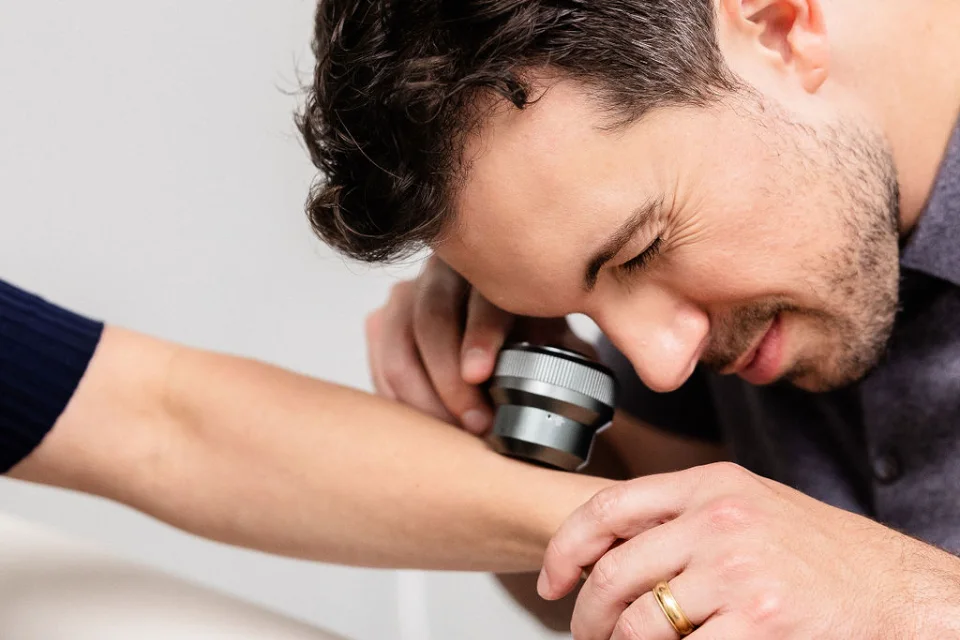
Basal cell carcinoma, or BCC, is the most common form of skin cancer. It grows slowly and rarely spreads, and when it is treated early it is almost always cured.
What Basal Cell Carcinoma Is
Basal cells sit at the bottom of the outer layer of the skin, where they make the new cells that replace the ones that wear away. When their DNA is damaged, most often by ultraviolet light from the sun or tanning beds, they can begin to grow out of control and form a cancer.
Types of Basal Cell Carcinoma
- Nodular, the most common: a shiny, pearly bump, often with tiny visible blood vessels, usually on the face
- Superficial: a flat, pink or red, slightly scaly patch, often on the chest, back, arms or legs
- Morpheaform, also called sclerosing: a firm, waxy, scar-like area whose edges are hard to see
- Pigmented: brown, black or blue areas within the growth, more common in darker skin
Symptoms to Watch For
- A shiny or pearly bump that may be pink, red, white or skin-colored, or brown in darker skin
- A flat, scaly patch that does not heal
- A sore that bleeds, crusts, seems to heal and then comes back
- A waxy, scar-like area without an injury
- A pink growth with a raised edge and a dip in the center
Basal cell carcinoma grows slowly, over months or years, and is usually painless, so it is easy to ignore.
Where It Appears and Who Gets It
It usually appears on skin that gets the most sun: the face, nose, ears, scalp, neck, shoulders, arms and legs. It is more common in people with fair skin and light eyes, in older adults, after years of sun exposure or tanning, in people who have had one before, and in people with a weakened immune system. A rare inherited condition, basal cell nevus syndrome, causes many basal cell carcinomas from a young age.
How It Is Treated
A biopsy confirms the diagnosis. Because basal cell carcinoma rarely spreads, the goal is to remove it completely while keeping as much healthy skin as possible.
- Mohs surgery, which removes the cancer layer by layer with a check under the microscope at each step, for the face, recurrent cancers and larger tumors
- Surgical excision with a margin of healthy skin
- Curettage and electrodesiccation, scraping and cautery for small, low-risk spots
- Prescription creams or photodynamic therapy for some superficial cancers
- Radiation when surgery is not a good option
Preventing Another One
Having one basal cell carcinoma raises the chance of another. Keep up yearly skin exams, check your own skin each month, and protect your skin from the sun every day.
Before You Go
It rarely spreads, but left alone it can grow deep and damage the skin, cartilage or bone around it. Treated early, it is almost always cured.
No. It can look as if it has healed and then return. A spot that keeps coming back should be checked.
It depends on where the cancer is, how large it is and its type. Mohs surgery is often recommended on the face, scalp, ears and hands.
Reading is a start. A visit is an answer.
Schedule An Appointment →