
St. Petersburg, FL 33710
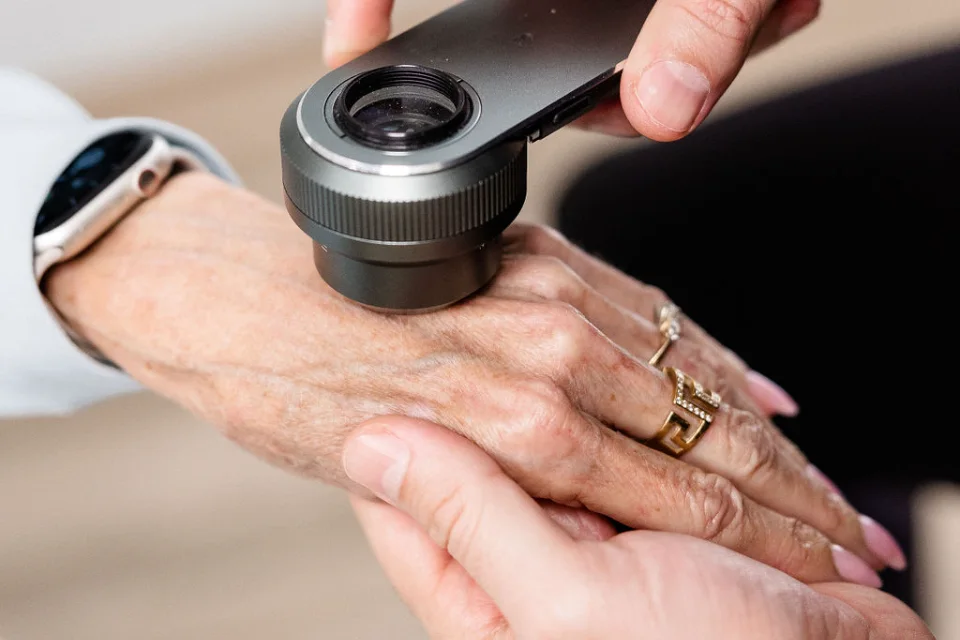
The legs get years of sun at the beach, on the water and on the golf course, and they are easy to overlook in a skin check. In women, the legs are one of the most common places for melanoma to appear.
What Skin Cancer on the Leg Can Look Like
- A new mole, or a mole that changes in size, shape or color
- A pink or red scaly patch that does not heal
- A firm red bump or a crusted sore
- A shiny, pearly bump
- A spot that itches or bleeds without an injury
- A dark streak or spot on the sole or under a toenail
The Types Most Often Found on the Legs
Melanoma often appears on the legs, especially in women. Squamous cell carcinoma is common on the lower legs of older adults with sun-damaged skin. Superficial basal cell carcinoma can look like a pink, scaly patch and is sometimes mistaken for eczema. Check the soles of your feet and between your toes too, since melanoma can appear there as well.
Why Early Detection Matters
A small skin cancer usually means a simpler procedure and a smaller scar. Skin on the lower legs also heals more slowly than skin elsewhere, which is one more reason to treat a cancer while it is small.
Treatment Options
Treatment starts with a biopsy to confirm what the spot is. Depending on the type, size and location, options include surgical excision, Mohs surgery for selected cancers, scraping and cautery for small, low-risk spots, and prescription creams for some superficial cancers. Your treatment plan is tailored to the cancer and to you.
Recovery and What to Expect
Some swelling, tenderness and bruising around the site is normal. Keep the wound clean, follow your wound care instructions, raise the leg when you can, and go easy on strenuous activity until you are told it is safe. Your team will tell you when any stitches come out and when to come back for a check.
Before You Go
Look for new spots, sores that do not heal, and moles that change. Any spot that looks different from the others deserves a check.
With a skin exam and, if needed, a small biopsy under local numbing.
It can, and a new skin cancer can appear elsewhere, so regular follow-up skin exams matter.
Reading is a start. A visit is an answer.
Schedule An Appointment →