
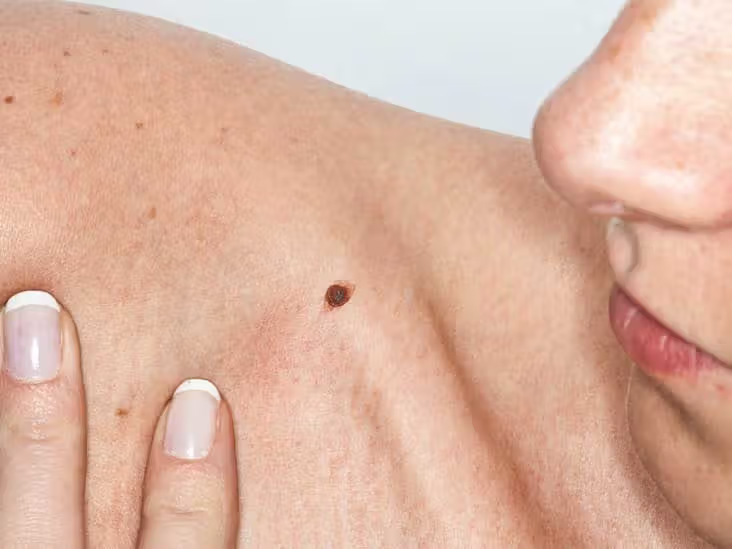
Skin cancer often appears as an unusual mark, bump, or color change. Learning what to look for — and acting early — makes treatment simpler and outcomes better.
Why Early Detection Matters
Most skin cancers are highly treatable when found early. A small change in a mole, freckle, or new growth is often the first signal — and catching it before it spreads can mean a simpler procedure, a smaller scar, and greater peace of mind.
What Skin Cancer Spots Can Look Like
Basal cell and squamous cell carcinomas often show up as pearly bumps, scaly patches, sores that do not heal, or spots that bleed easily. Melanoma may look like a new mole or a change in an existing one — irregular edges, uneven color, or a spot that is growing or evolving.
The ABCDE Guide
When you check your skin, remember Asymmetry, irregular Borders, uneven Color, Diameter larger than a pencil eraser, and any spot that is Evolving. A sore that will not heal deserves the same attention. Photograph concerning spots so you can compare over time.
How We Evaluate And Treat
At Wall Dermatology, a concerning spot starts with a careful exam — and, when needed, a biopsy. Treatment depends on the type, size, and location. Options may include surgical removal, Mohs micrographic surgery for precision on the face and other delicate areas, topical therapies, or other approaches tailored to you.
Prevention Still Counts
Daily broad-spectrum sunscreen, protective clothing, shade during peak UV hours, and skipping tanning beds all lower risk. Pair that with monthly self-checks and yearly full-body skin exams — or more often if you have a history of skin cancer or many atypical moles.
Before You Go
They may appear as new growths, changes in existing moles, or unusual color, shape, or texture on the skin.
Monthly self-exams plus at least one annual visit with a dermatologist are a strong baseline. High-risk patients may need more frequent checks.
Yes. Early detection and treatment generally lead to the best outcomes, with less invasive care and stronger cure rates.
Reading is a start. A visit is an answer.
Schedule An Appointment →